

Perpetuity
“A society is not free to remain forever young. Even in its moments of flowering glory it must leave behind its filth and detritus…Old age cannot be wiped out by institutions…”
F. Nietzsche
Perpetuity is, above all, a biological condition.
It is associated with the survival and continuity of our species but is also projected and reflected in other areas of the social imagination. As an essential part of human subjectivity, it has a quiet influence on almost everything around us. The idea of age, that something or someone may grow old, deteriorate or disappear, makes us uncontrollably sick at heart.
Our denial of the transient, perishable and finite function of our bodies is too strong for us, and it fills the coffers of the cosmetic and plastic surgery industries.
Yoel Díaz Vázquez’s latest work questions precisely this notion of perpetuity as an absurd ambition and one of the most foolish utopian longings of humankind. From biological perpetuation we have passed to political perpetuation and with it the mad urge to create bubbles that we know, sooner or later, must burst.
Everything that perpetuates itself is condemned to anachronism and carries its own decline within it. The path into darkness is no less real than that into the light.
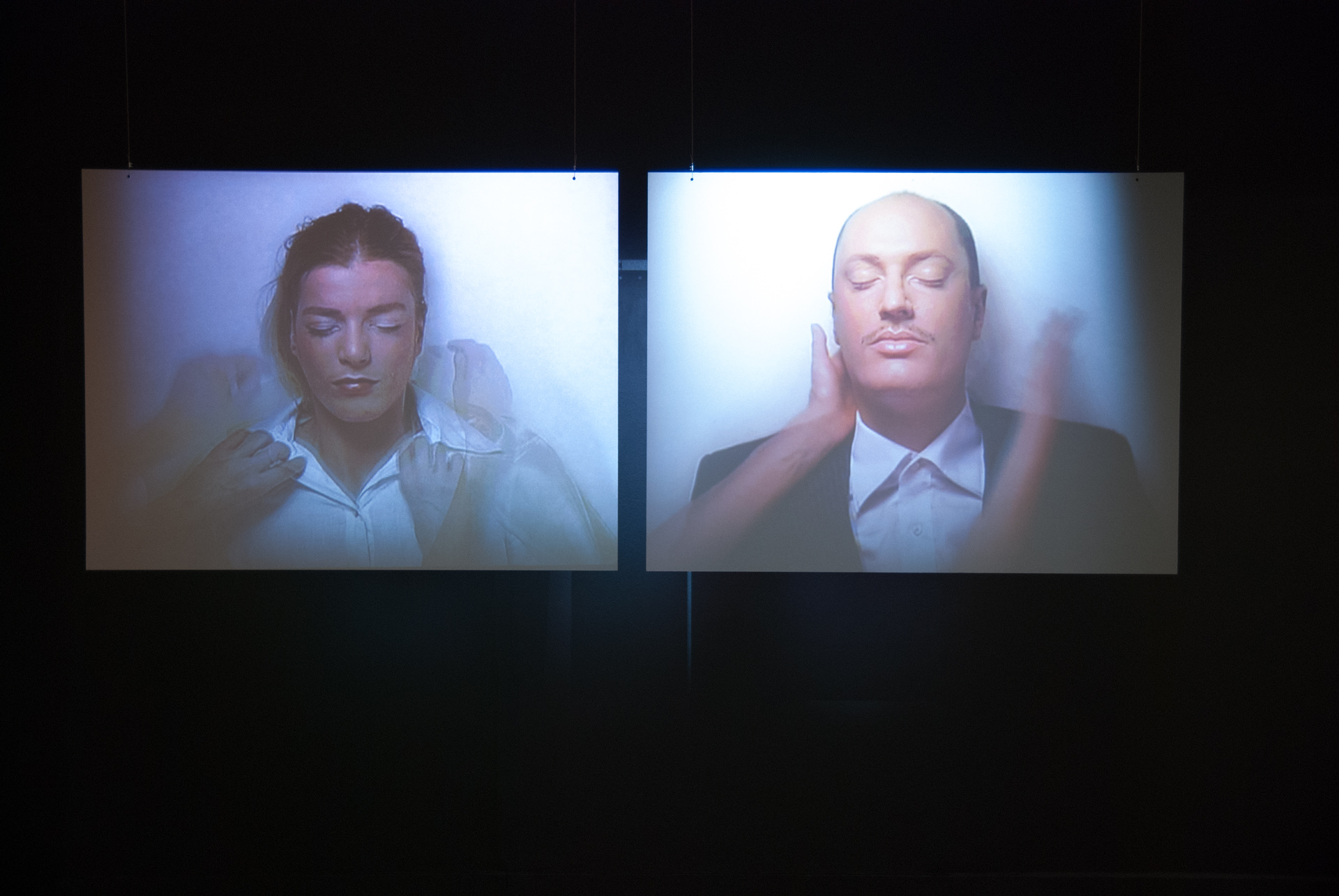
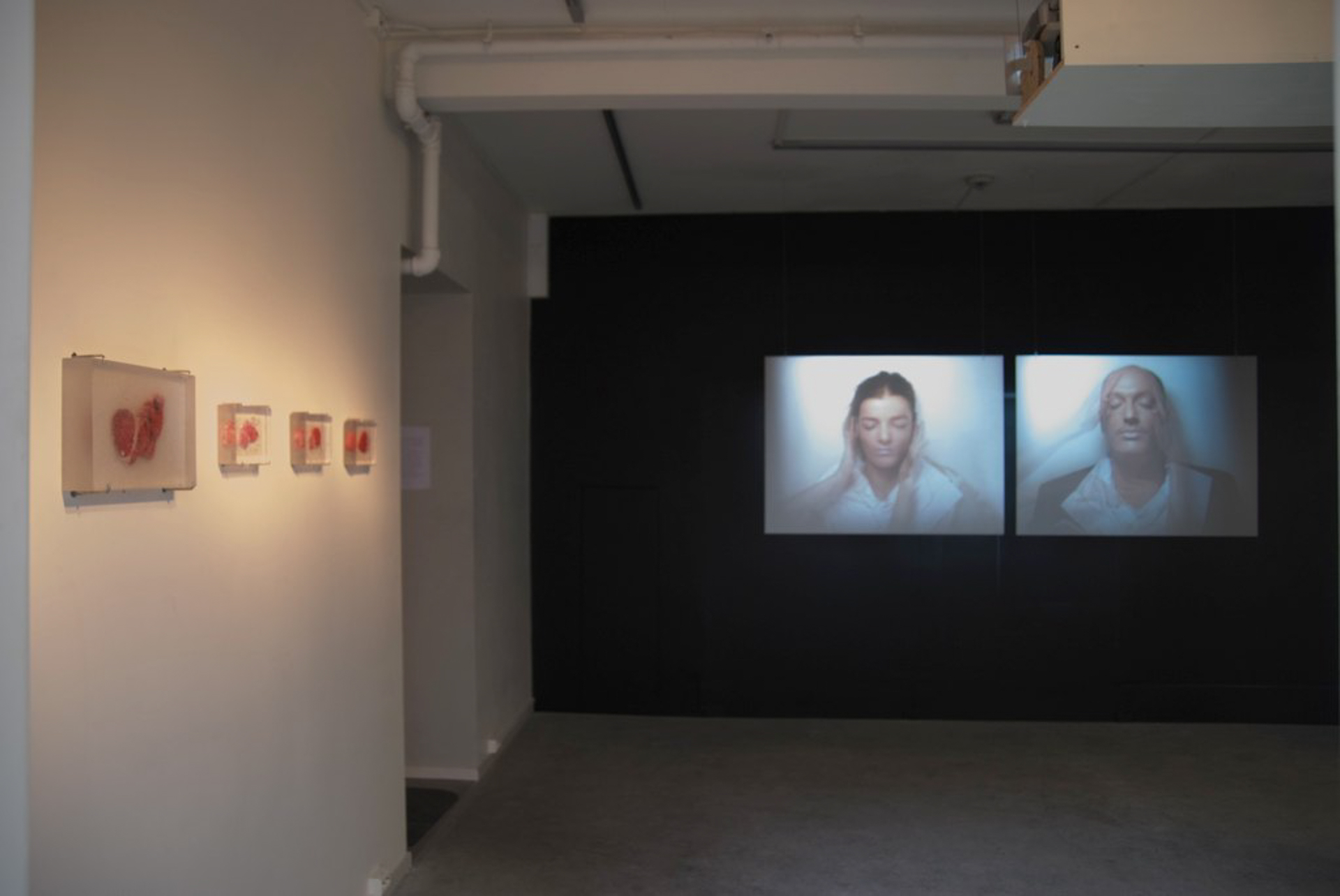
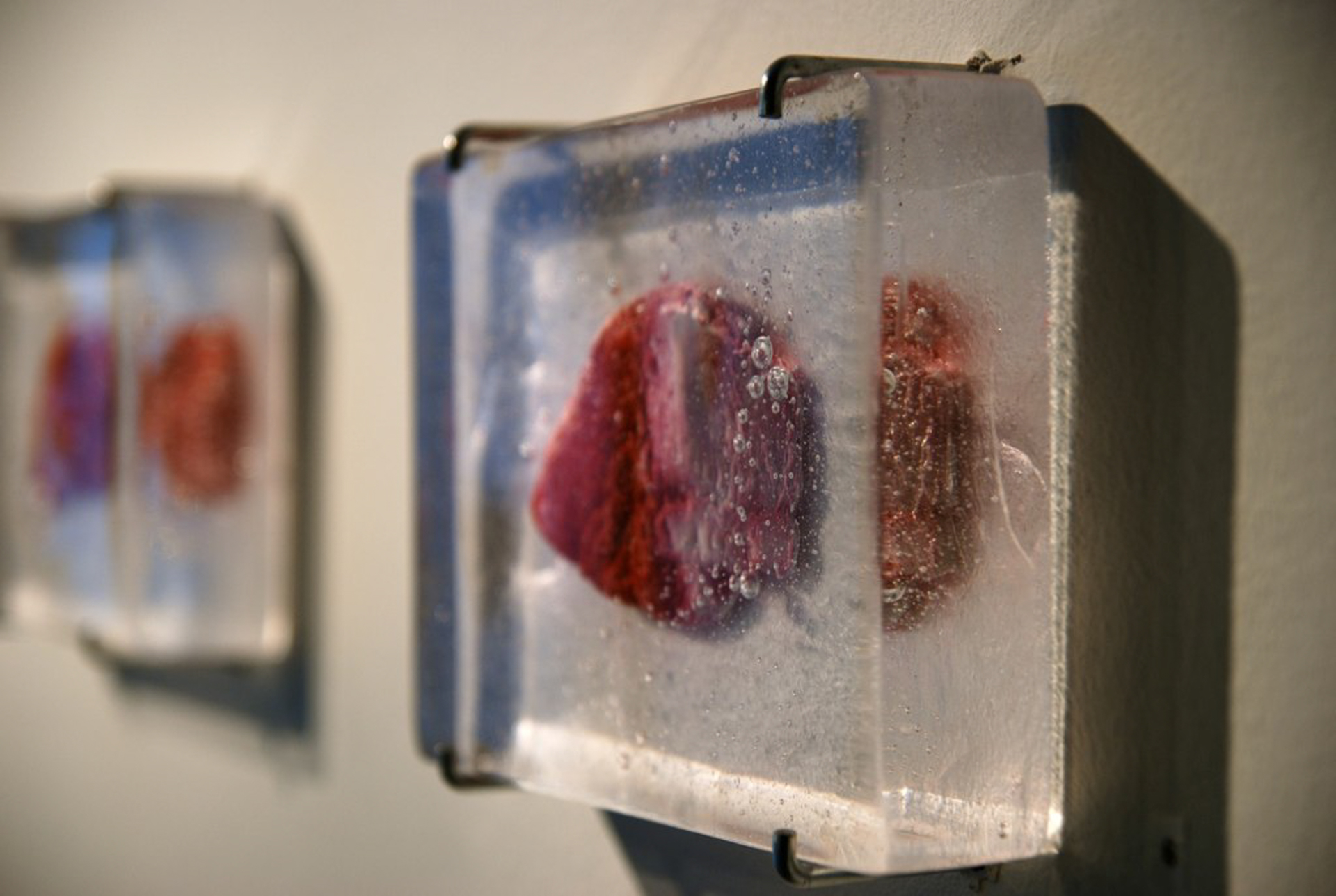
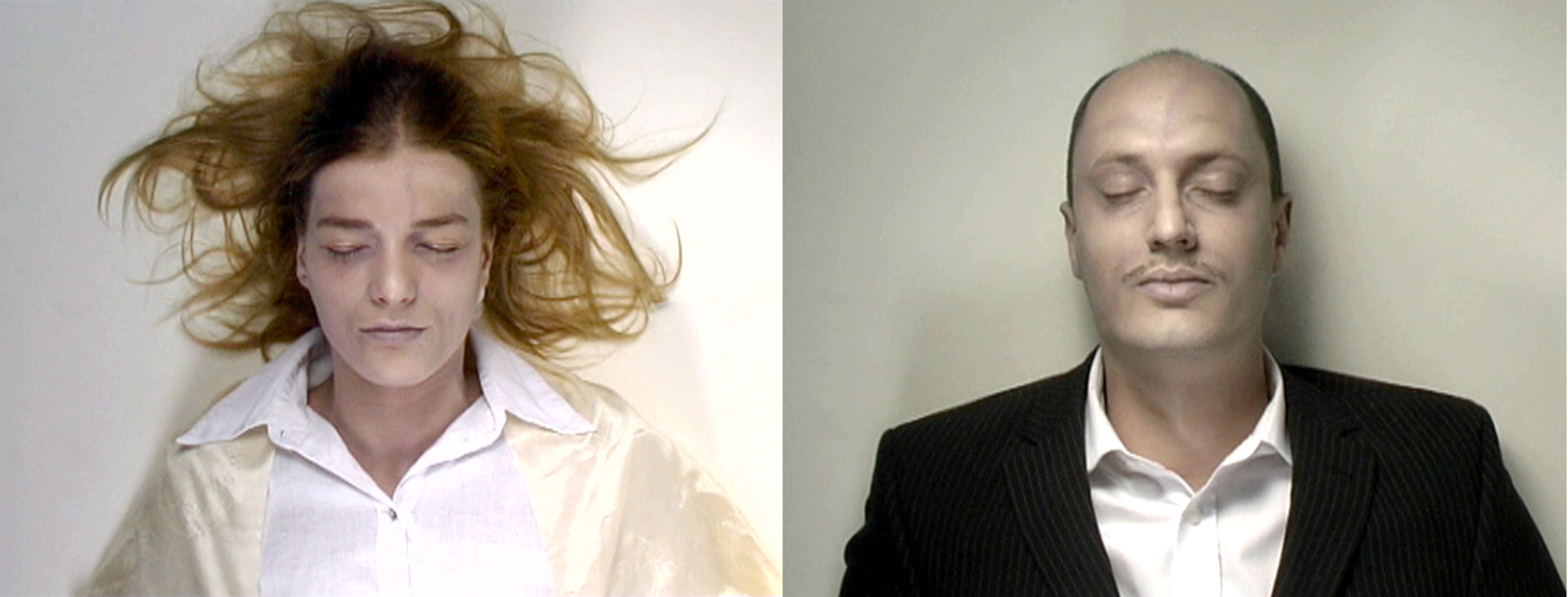
The series Flesh, for example, show hunks of artificial meat, manipulated and retouched with colour to appear preserved intact in transparent rectangles of crystal. The video-installation Make-up deals with the post mortem beauty treatments which families give to their dead loved ones before burial. Both are parodies of man’s vain attempts to wipe out the inevitable ravages of time.
Flesh and Make-up are also symbolic references to the great paradox implicit in the pragmatism with which the post-historic individual faces up to perpetuity. Alienated from his or her own history and with no real idea of the future, this mere creature of flesh now floats in a bubble of the continuous present. Through a deep desire to materialize time, he has, unfortunately, denied the practical usefulness of cyclical growth, with its indispensable and successive regenerations.
Yoel Díaz’s work invites us to see perpetuity, conservative and anti-dialectic as it is, as one of the most deep-rooted cultural fallacies of all time.
Juan Carlos Betancourt
Berlin, 4th February 2009.